Key Takeaways:
|
When planning end-of-life arrangements, Australian families are increasingly considering their options beyond traditional cemeteries. Understanding the differences between traditional cemetery burial and natural memorial gardens can help you make an informed decision that aligns with your family’s values, budget, and wishes.
This comprehensive guide examines both options with factual data from government sources, academic research, and industry associations to help you choose the memorial option that’s right for your family.
Understanding Your Memorial Options
Traditional Cemeteries
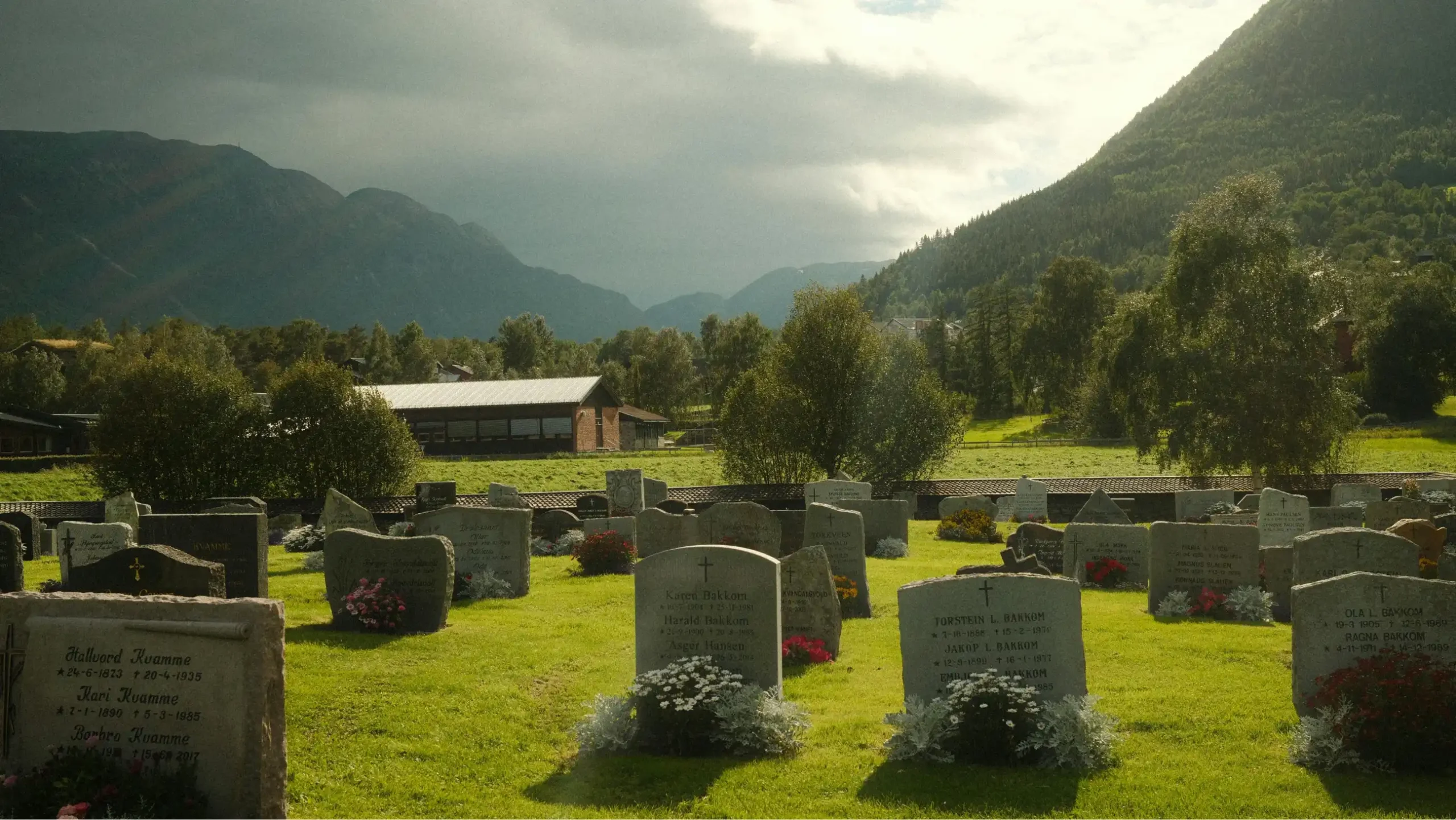
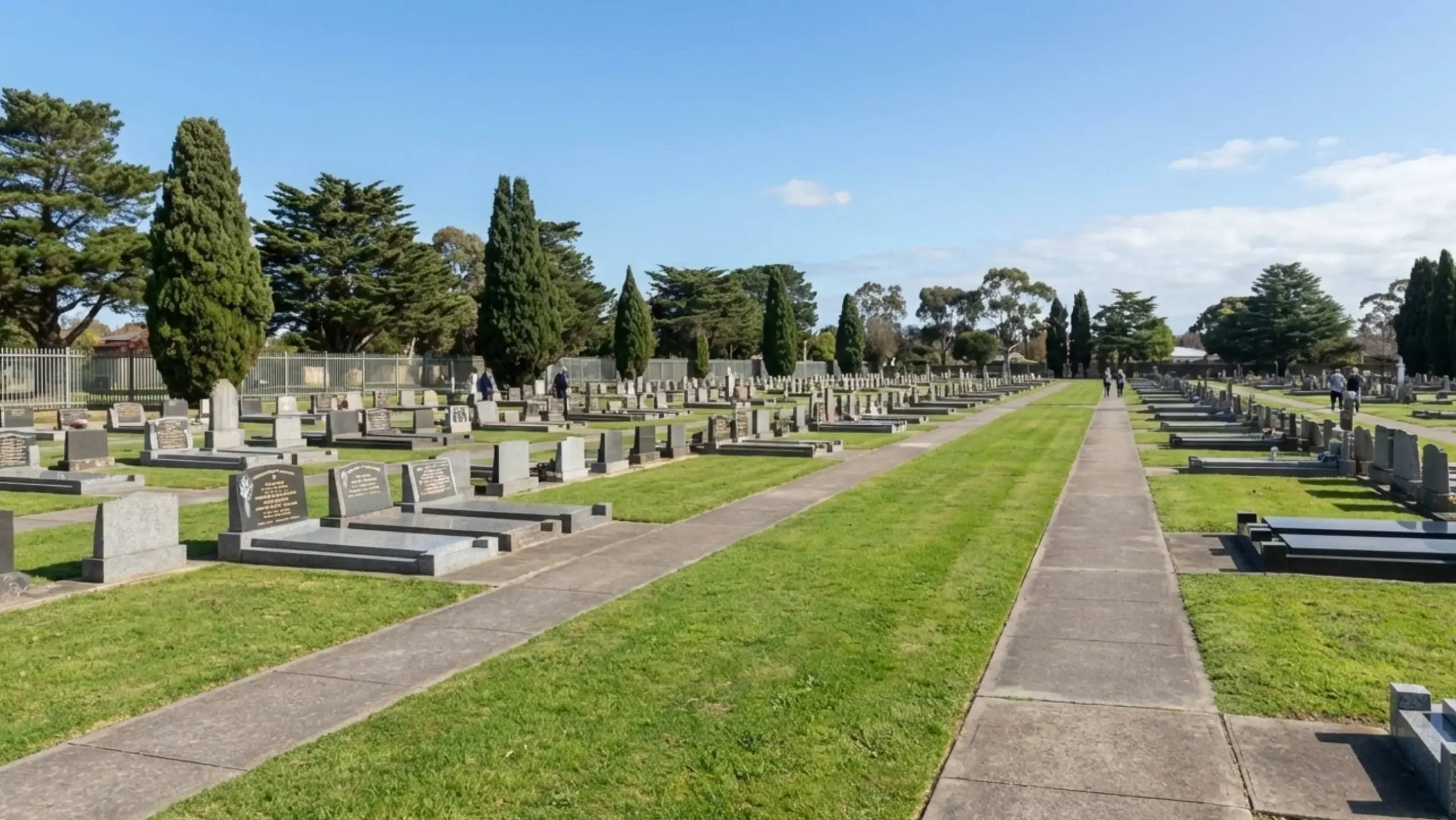
Traditional cemeteries are familiar to most Australians, maintained grounds with rows of headstones, monuments, and memorial plaques. They accommodate both full-body burials in plots and cremated remains in niches, columbariums, or memorial walls. The key characteristic is permanence through stone monuments and structured memorial spaces.
Natural Memorial Gardens
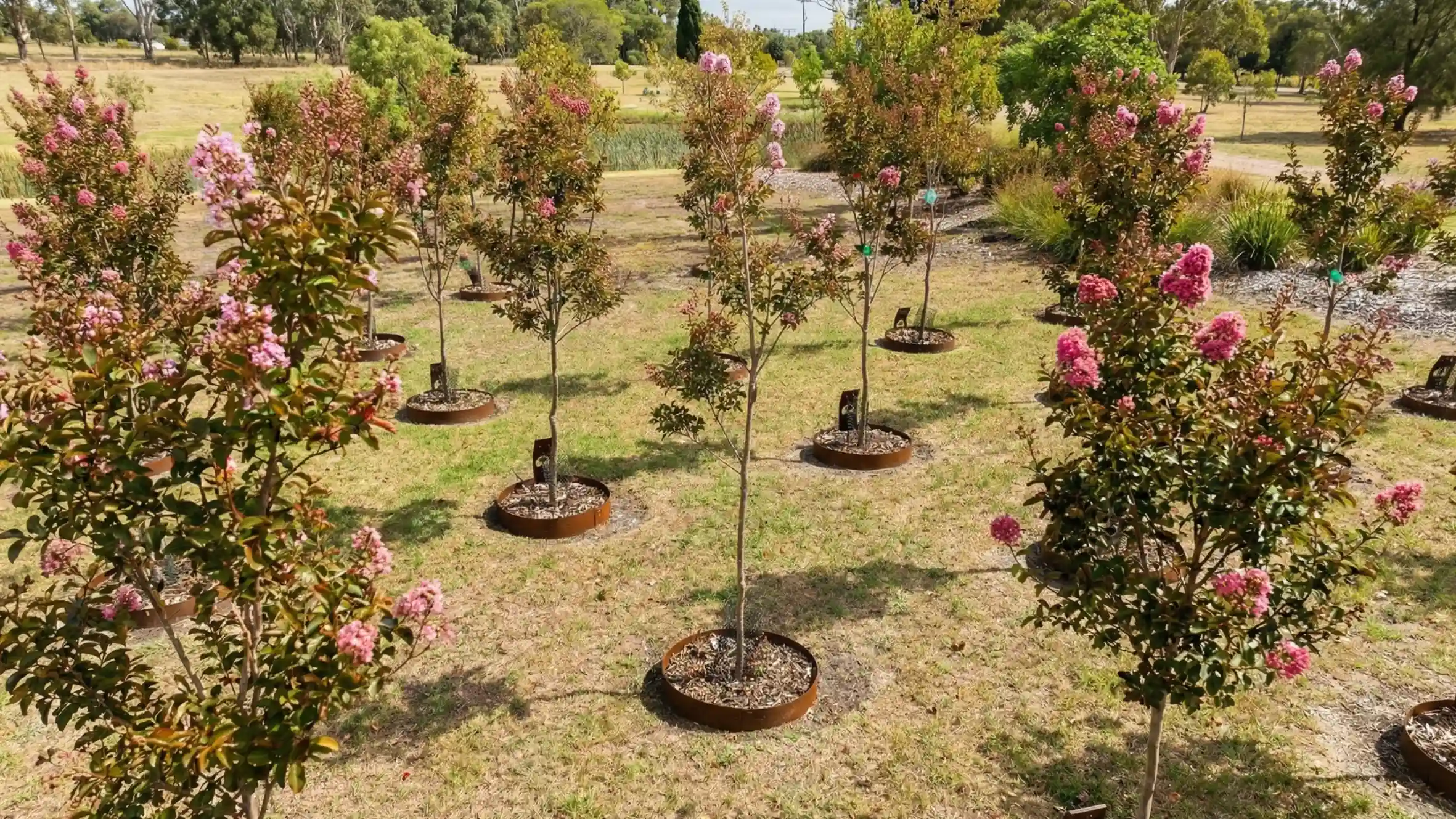
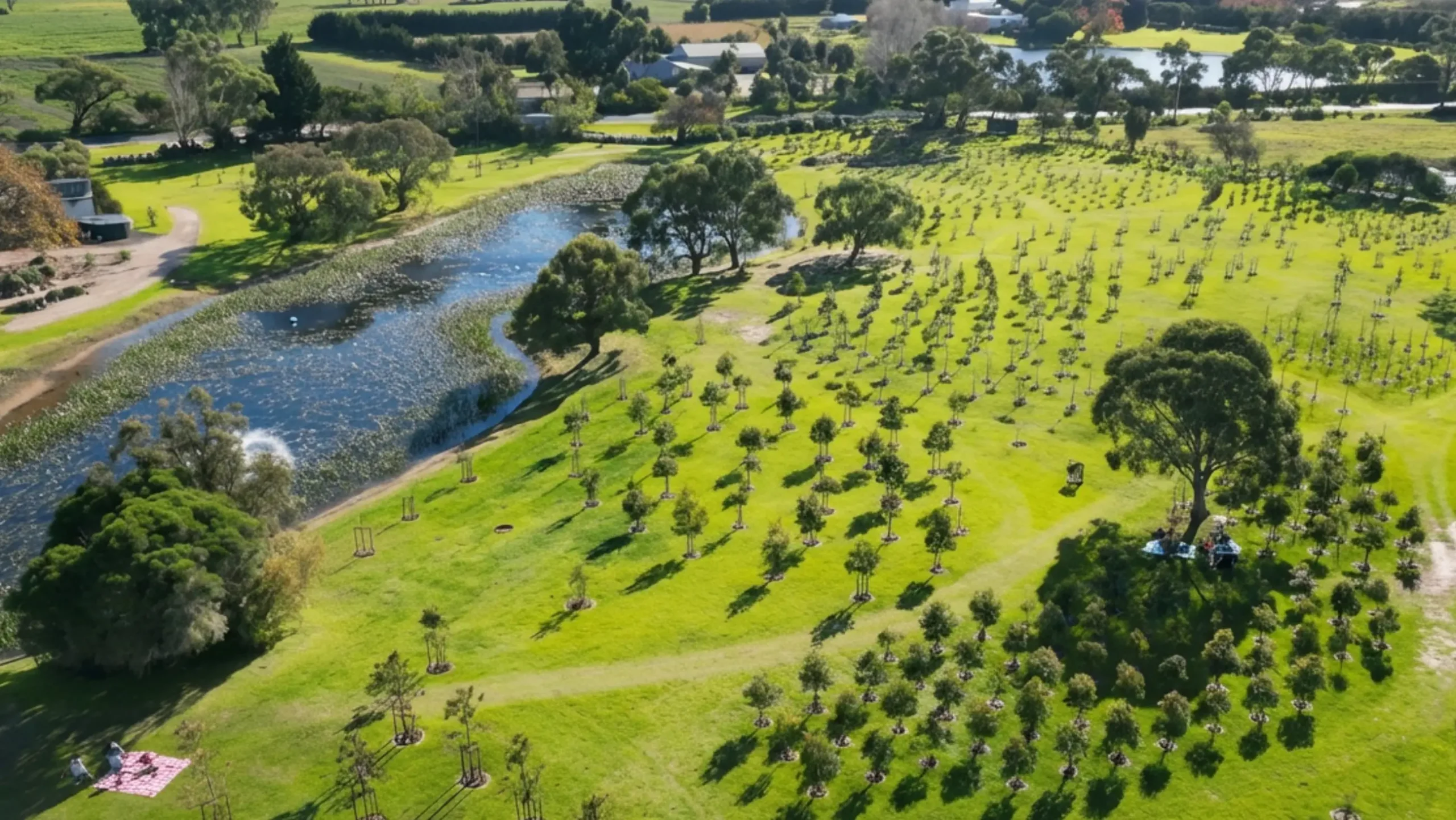
Natural memorial gardens represent a contemporary approach to memorialization. Cremated remains are treated and infused into living memorial trees within a natural, park-like forest setting. Instead of visiting a headstone, families visit a growing tree that changes with the seasons – a living tribute that actively contributes to the environment.
The fundamental difference: Traditional cemeteries preserve memory through permanent stone monuments, while memorial gardens create living legacies through nature.
Traditional Cemeteries: Benefits and Considerations
Benefits of Traditional Cemeteries
Religious and Cultural Tradition
Many faiths, including Orthodox Judaism, Islam, and certain Christian denominations, require traditional burial. For these communities, cemeteries provide essential sacred spaces that honor centuries of religious tradition and practice.
Your guide to a living memorial
Download our free brochure to explore tree varieties, planting locations, and how a memorial tree can become a lasting place for remembrance.
Permanent Physical Memorial
Stone monuments offer an unchanging marker that families can visit for generations. For those who value tangible permanence, headstones provide lasting physical presence and stability.
Established Infrastructure
With extensive networks across Australia, traditional cemeteries offer familiar processes and locations. Funeral directors are experienced with cemetery procedures, making the process straightforward for families.
Accommodation for Both Burial and Cremation
Modern cemeteries can accommodate various preferences, including full-body burial plots, cremation niches, memorial walls, and columbariums.
Important Cost Considerations
According to the Southern Metropolitan Cemeteries Trust (SMCT), a Victorian government entity, burial plot costs in Melbourne range from $4,000 to $25,000, with Sydney plots ranging from $5,000 to $30,000. Premium locations can significantly exceed these amounts, with plots advertised for $70,000 to $100,000 in sought-after cemeteries.
Total Cemetery Costs Typically Include:
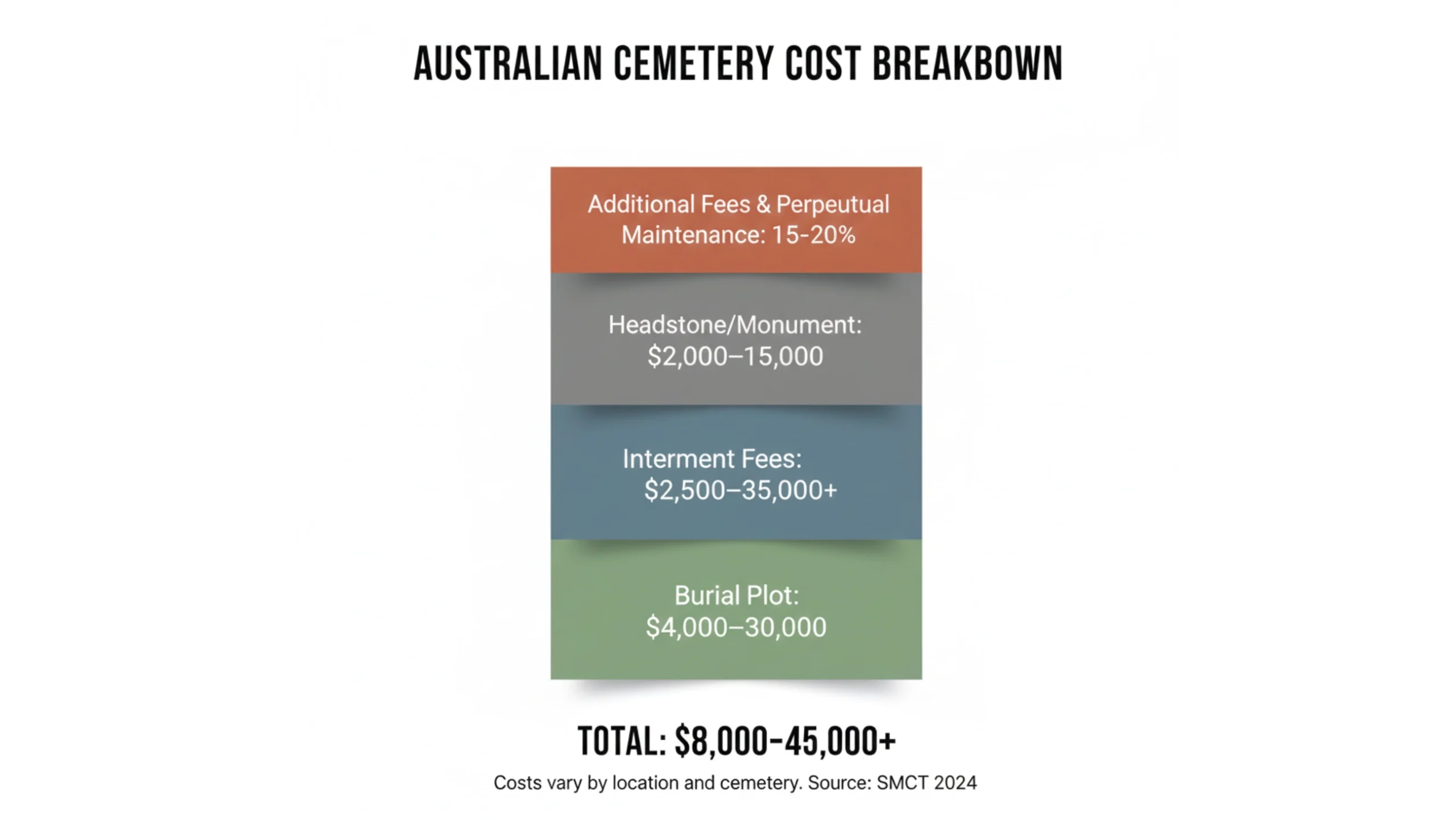
- Burial plot purchase: $4,000 – $30,000+
- Interment fees (grave preparation): $1,500 – $3,500
- Headstone or monument: $2,000 – $15,000+
- Grave liner or vault (if required)
- Monument permits and installation
- Total estimated cost: $8,000 – $45,000+
Perpetual Maintenance Fees
The Victorian Department of Health requires cemetery trusts to add 15-20% to all fees for perpetual maintenance obligations. For a $5,000 plot, this represents approximately $200 per year indefinitely to maintain grass, pathways, and monuments.
Australia’s Cemetery Space Crisis
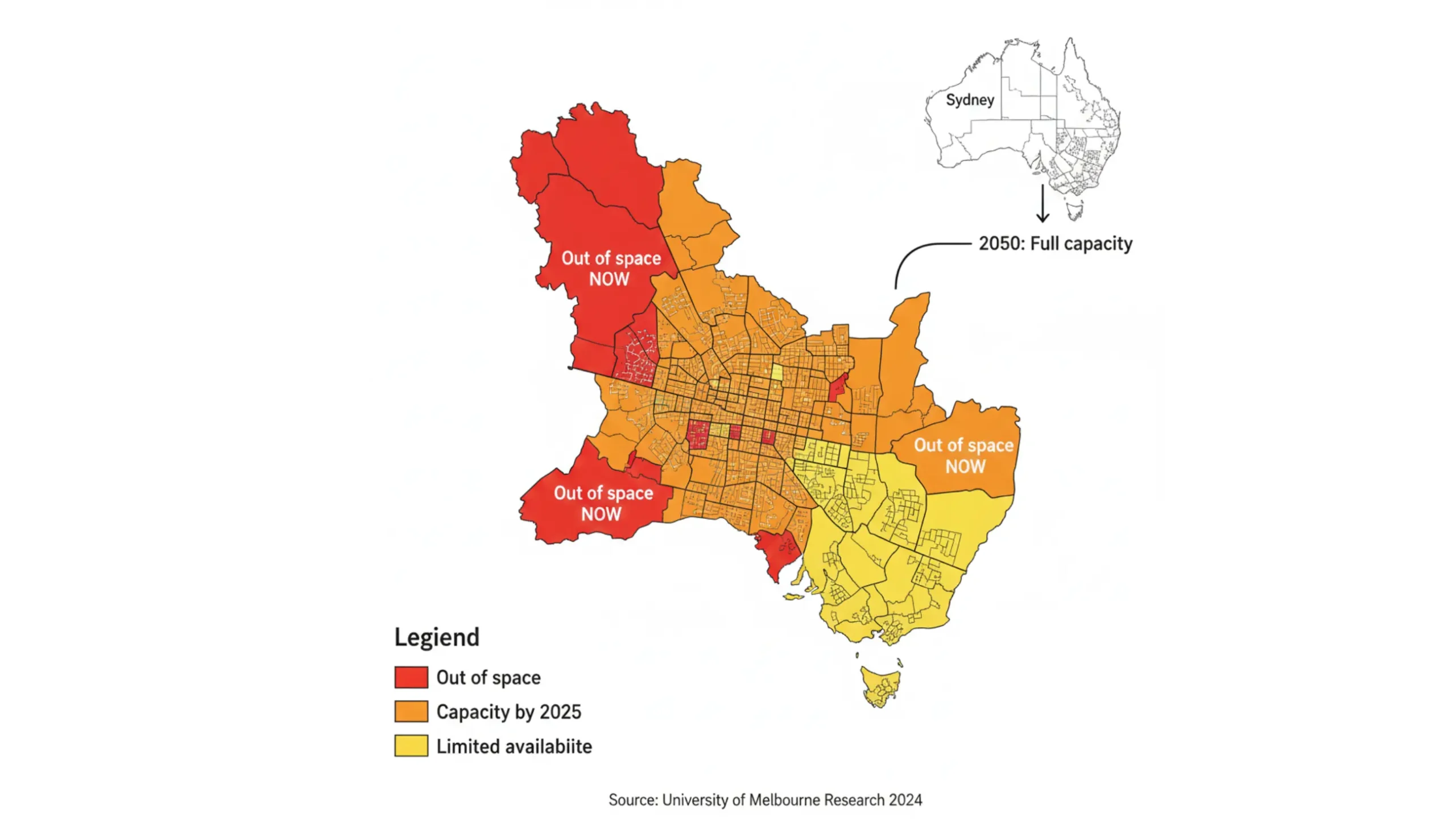
Research from the University of Melbourne published in The Conversation found that:
- Sydney’s available burial space will be exhausted by 2050
- Some religious communities have only 2-3 years of burial space remaining
- Nine Melbourne metropolitan councils will run out of plots by 2035
- Some areas are already at capacity
This scarcity is driving burial plot prices significantly higher as demand exceeds limited supply.
Environmental Impact
Research conducted by Centennial Park Cemetery Authority in 2008 found that while cremation produces approximately 160 kilograms of carbon dioxide at the time of cremation, the long-term environmental impact of traditional burial is higher due to ongoing maintenance requirements:
- Continuous mowing and irrigation of extensive lawn areas
- Regular application of pesticides and fertilizers
- Embalming chemicals (including formaldehyde) that leach into soil
- Non-biodegradable casket materials
- Ongoing fuel consumption for maintenance equipment
Additional Considerations
Location Accessibility
As noted in academic research, new cemeteries are increasingly being located further from city centers due to land scarcity, which can create access challenges for elderly visitors.
Regulations and Restrictions
Most cemeteries maintain strict guidelines regarding monument sizes, designs, decorations, and visiting hours to ensure uniformity and proper maintenance.
Natural Memorial Gardens: A Contemporary Alternative
Benefits of Memorial Gardens
Transparent, All-Inclusive Pricing
Memorial gardens like Mornington Green offer single, transparent pricing starting from $8,000 with no hidden fees, ongoing maintenance charges, or additional monument costs.
Active Environmental Restoration
Rather than minimizing environmental harm, memorial gardens actively restore ecosystems. At Mornington Green, for every memorial tree planted, an additional 200 trees are planted to offset carbon footprints. The Living Legacy Formula detoxifies cremation ashes and restores soil biology.
According to the Australasian Cemeteries and Crematoria Association (ACCA), standard burial in traditional cemeteries is the most environmentally harmful method of body disposal due to resource-intensive processes. Natural memorial options eliminate:
- Toxic embalming chemicals
- Non-biodegradable materials
- Ongoing fuel consumption for maintenance
- Chemical pesticides and fertilizers
- Water-intensive irrigation systems
Living Legacy Creation
Memorial trees provide a dynamic, growing tribute that:
- Changes with seasons (spring blossoms, summer shade, autumn colors)
- Grows stronger and more magnificent over time
- Produces flowers, seeds, and new life
- Creates wildlife habitat
- Participates actively in the carbon cycle
Natural Visiting Experience
Families can walk through forest settings, have picnics under memorial trees, bring children to play freely among the trees, and connect with the memorial naturally without visiting hour restrictions or formal regulations.
Sustainable Long-Term Solution
Victorian government data shows approximately 70% of Australians now choose cremation, with rates continuing to rise. Memorial gardens work with this demographic trend rather than against it, offering a sustainable, scalable solution without space limitations.
Appeal to Contemporary Values
Research indicates that 72% of Australians aged 20-30 prefer cremation over traditional burial, reflecting growing environmental consciousness and changing attitudes toward memorialization.
Considerations for Memorial Gardens
Cremation Required
Natural memorial gardens are designed exclusively for cremated remains. This option is not suitable for faiths or individuals requiring full-body burial (Orthodox Judaism, Islam, some Christian denominations).
Non-Traditional Approach
For families who value traditional cemetery monuments and permanent headstones, living tree memorials may feel unfamiliar or too different from conventional memorialization.
Currently Limited Locations
While traditional cemeteries have extensive networks built over more than a century, memorial gardens are newer and less widespread. Mornington Green is located in Somerville, Victoria.
Living, Changing Memorial
Unlike static monuments, trees are living organisms that grow and change with seasons. This evolution is meaningful to some families but may not suit those preferring unchanging permanence.
Side-by-Side Comparison
| Factor | Traditional Cemetery | Natural Memorial Garden |
| Initial Cost | $8,000 – $45,000+ (plot, interment, monument, fees) | $8,000 all-inclusive |
| Ongoing Costs | 15-20% perpetual maintenance surcharge built into fees | None |
| Space Availability | Sydney exhausted by 2050; Melbourne areas running out by 2035; severe shortage | Sustainable model with no space crisis |
| Environmental Impact | Higher long-term impact due to ongoing maintenance, chemicals, resources | Actively restores environment; plants 200+ trees per memorial |
| Memorial Type | Stone monument (headstone/plaque) – permanent, unchanging | Living tree – grows, changes with seasons, produces new life |
| Visiting Experience | Formal cemetery setting with maintained paths and regulations | Natural forest setting with freedom to picnic, gather, celebrate |
| Personalization | Strict regulations on monument size, design, decorations | Flexible tree species selection, natural interaction |
| Religious/Cultural Fit | Essential for faiths requiring full-body burial | Suitable for those accepting cremation |
| Long-Term Certainty | Monument remains unchanged for generations | Tree evolves through seasons while maintaining living presence |
Understanding the Financial Difference
The cost comparison extends beyond initial investment. With traditional cemeteries, the Victorian Department of Health’s required 15-20% perpetual maintenance surcharge ensures ongoing costs that continue indefinitely.
For families experiencing financial stress from funeral costs – research shows 33% of Australians over 50 who paid for funerals faced financial difficulties – transparent, all-inclusive pricing provides important financial clarity and security.
The environmental difference is equally significant. Traditional cemeteries require continuous resource inputs (fuel, water, chemicals) for decades or centuries, creating compounding environmental costs. Memorial gardens reverse this equation by improving soil health, creating wildlife habitat, and participating in natural carbon cycles.
Australia’s cemetery space crisis affects both availability and pricing immediately. When Sydney faces exhaustion by 2050 and Melbourne areas are already at capacity, this explains premium plots reaching $100,000 – simple supply and demand economics.
Making Your Decision
Traditional Cemeteries Are Appropriate When:
- Your faith requires full-body burial
- Your family has existing plots at a particular cemetery
- You strongly value traditional stone monuments
- The permanence of unchanging memorials is important to you
- You’re comfortable with ongoing maintenance costs
Natural Memorial Gardens Are Appropriate When:
- You’ve chosen or are considering cremation
- Environmental impact is a significant concern
- Transparent, all-inclusive pricing is important
- You prefer a living legacy over static monuments
- You want to contribute positively to the environment
- Australia’s cemetery space crisis concerns you
- The concept of a growing, changing memorial appeals to you
How Mornington Green Works
For families interested in natural memorial gardens, here’s our process:
- Tree Species Selection
Choose from Queensland Kauri, English Oak, Cherry Blossom, Magnolia, Flame Tree, Ginkgo, Golden Wattle, and other species. Each tree has unique characteristics and seasonal displays. - Living Legacy Formula Treatment
Cremation ashes are treated using our patented Living Legacy Formula, which detoxifies them and restores soil biology. This scientific process ensures the tree can properly absorb nutrients and thrive. - Tree Integration
Treated ashes are infused into the tree’s root system. The tree draws nutrients from these ashes, which become leaves, flowers, seeds, and new growth. The tree participates in photosynthesis, converting CO2 into oxygen and creating habitat for wildlife. - Ongoing Growth
Families can visit their memorial tree year-round, watching it blossom in spring, provide shade in summer, display colors in autumn, and rest in winter. Children and grandchildren can create new memories while maintaining connection to their loved one.
Pricing and Inclusions
Starting from $8,000 all-inclusive:
- Living Legacy Formula ash treatment
- Selected tree species
- Planting and establishment in beautiful gardens
- 200 additional trees planted in your honor
- Perpetual care and maintenance
- No hidden fees or ongoing charges
For more information about creating a living legacy at Mornington Green, call (03) 9069 3719 or contact us through our website.
The Importance of Planning Ahead
Planning end-of-life arrangements in advance significantly reduces stress and financial burden on families. Research indicates approximately 33% of Australians over 50 who paid for funerals experienced financial difficulties as a result.
Benefits of Pre-Planning:
- Make decisions calmly without time pressure
- Compare options thoroughly
- Lock in current pricing
- Provide clear instructions to family
- Eliminate logistical burden during grief
- Ensure your wishes are honored
Consider discussing your preferences with loved ones and exploring pre-planning options to secure peace of mind for yourself and your family.
Your legacy matters. Whether through a traditional cemetery monument or a living tree in a memorial garden, the choice should reflect your values, beliefs, and vision for how you’ll be remembered.