
When someone you love is approaching the end of their life, the number of decisions you face can feel enormous. Medical care. Comfort. Paperwork. What comes after. Most families find themselves making these decisions with very little preparation, and under conditions of grief.
This guide covers the main end-of-life care options available in Melbourne: what they are, how to access them, what they cost, and how they differ. It’s written for families navigating this for the first time, not for medical professionals. You won’t find clinical jargon here. Just honest, plain information.
What Are the Main End-of-Life Care Options in Melbourne?
End-of-life care in Melbourne falls into four broad categories: palliative care (medical symptom management), hospice and inpatient care, home-based care, and Voluntary Assisted Dying (VAD), which became legal in Victoria in June 2019. Most families draw on a combination of these, depending on the person’s condition, their wishes, and what’s practically possible at the time.
The right option rarely looks the same from one family to the next. What matters most is understanding what each pathway actually offers, and asking the right questions before a crisis forces the conversation.
Palliative Care in Melbourne
What is palliative care?
Palliative care focuses on managing pain and symptoms rather than curing illness. It can begin at any stage of a serious illness, not only at the very end, and it runs alongside other medical treatment. The goal is quality of life: keeping someone comfortable, supported, and as independent as possible for as long as possible.
In Victoria, palliative care is available through public hospitals, private hospitals, specialist outpatient services, and community-based teams who visit patients at home. It’s covered under Medicare for eligible patients.
Your guide to a living memorial
Download our free brochure to explore tree varieties, planting locations, and how a memorial tree can become a lasting place for remembrance.
Who provides palliative care in Melbourne?
Several major Melbourne hospitals have dedicated palliative care units, including Austin Health, Alfred Health, Cabrini Health, Peter MacCallum Cancer Centre, and St Vincent’s Hospital. Most have both an inpatient palliative care ward and a community team that supports patients at home.
For families in Melbourne’s south and south-east, Peninsula Health and Monash Health both offer palliative care services across their campuses and in the community.
The Victorian Government’s Palliative Care Victoria directory at palliativecare.org.au is the most reliable place to search by suburb or postcode.
How much does palliative care cost?
Public palliative care through the Victorian health system is free for eligible Medicare cardholders. Private palliative care in a private hospital or with a private specialist involves out-of-pocket costs that depend on your health insurance cover. A palliative care social worker can help families work out what financial support may be available.
Hospice Care in Melbourne

What is hospice care?
Hospice care is a specific type of palliative care for people who are in the final weeks or months of life. The focus shifts entirely to comfort rather than treatment. It can be delivered at home, in a dedicated residential hospice facility, or in a hospital’s palliative care ward. If you’re looking for hospice services near you in Melbourne, we’ve put together a separate guide covering the main options by area.
The word “hospice” can mean different things depending on who’s using it. In Melbourne, most residential hospices are small, home-like facilities rather than hospitals. People can spend their final days in a calmer, more personal environment than a standard ward allows.
Melbourne hospice options
Caritas Christi Hospice in Kew is one of Melbourne’s most established residential hospices, run by Calvary Health Care. It provides specialist palliative care in a residential setting for people with life-limiting illness. Other options include Bethlehem Hospital in Caulfield South, which has a long history of palliative care, and the Ross House hospice service in the eastern suburbs.
For families in Melbourne’s outer south-east and the Mornington Peninsula region, Peninsula Palliative Care offers both home-based and inpatient support.
Residential hospice places can be limited and waitlists do exist. GPs and hospital palliative care teams can help coordinate referrals.
Hospice care costs in Melbourne
Publicly funded hospice beds are available through the Victorian health system at no direct cost to families who qualify. Some private residential hospices charge fees. A GP referral or your hospital’s palliative care social worker is the right starting point for any hospice placement. If you’re also thinking about funeral costs at this stage, our guide on how to organise a low-cost funeral in Melbourne covers what to expect.
Home-Based End-of-Life Care
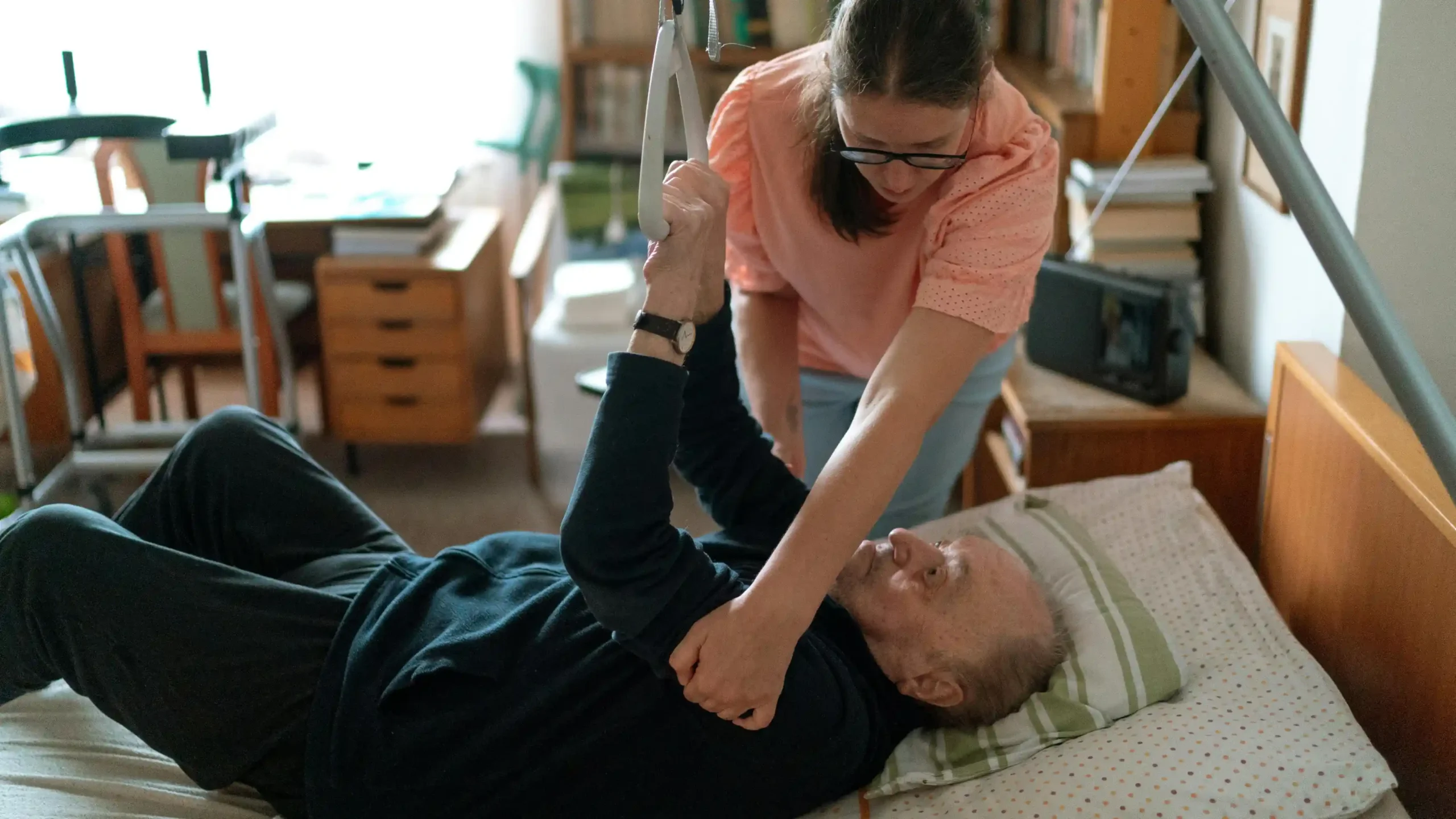
Many families prefer to have their loved one at home during the final weeks of life. This is possible in Melbourne with the right support in place, though it requires coordination and it isn’t the right fit for every situation.
What home-based support is available in Victoria?
The Victorian Government funds community palliative care through several programs. The Palliative Care Home Support Program provides nursing visits, personal care, and equipment loans. District nursing services can manage wound care, medication, and symptom monitoring. Home care packages through My Aged Care can fund personal care and domestic help for those who are eligible.
Respite care is also available and is often underused. Short breaks matter. Carer Gateway (1800 422 737) provides both practical help and counselling for family carers across Victoria.
What carers need to know
Home-based end-of-life care places real demands on family members. Many families find it meaningful to be present in this way. Others find it harder than they expected. Both responses are completely understandable.
If you’re considering caring for someone at home, ask your GP for a care plan that includes community nursing support and clear guidance on what to do in a medical emergency. Having a resuscitation plan documented and accessible is important. In Victoria, this is called a DNRO (Do Not Resuscitate Order), and your GP can explain how to put one in place.
Voluntary Assisted Dying in Victoria

Victoria was the first Australian state to legalise Voluntary Assisted Dying. The law came into effect on 19 June 2019, and since then several thousand Victorians have used the scheme.
Who is eligible for VAD in Victoria?
To be eligible, a person must be an Australian citizen or permanent resident aged 18 or over. They must have lived in Victoria for at least 12 months and have an incurable illness or medical condition that is advanced and will cause death within 12 months. For neurodegenerative conditions, the timeframe is 6 months. The person must be experiencing suffering that cannot be relieved in a way that is acceptable to them, and they must have full decision-making capacity at the time of each assessment.
Two trained medical practitioners must assess the person separately. Someone whose only underlying condition is a mental illness or disability is not eligible.
How to access VAD in Victoria
The Victorian VAD Care Navigator Service (1300 797 578) supports people who want information or are considering the process. This service is staffed by specialists and can help families understand what’s involved at any stage, without any obligation to proceed.
VAD is entirely voluntary. No one can apply on behalf of another person, and a doctor cannot raise the option unless a patient asks first.
Advance Care Planning: The Documents That Matter
Advance care planning means putting your wishes in writing before a medical crisis forces someone else to decide on your behalf. In Victoria, there are three key documents families should know about.
An Advance Care Directive lets a person record their values, wishes, and preferences for medical treatment. It becomes legally binding if they lose the capacity to communicate those preferences themselves.
An Enduring Power of Attorney (Medical Treatment) appoints a specific person to make medical decisions on your behalf if you cannot.
A DNRO (Do Not Resuscitate Order) is a medical order that tells emergency services not to attempt resuscitation. It applies at home, in residential care, and during transport.
These documents need to be completed while a person has full decision-making capacity. They cannot be put in place after a diagnosis has significantly affected cognitive function. The Victorian Government’s Advance Care Planning website at advancecareplanning.org.au has free, downloadable forms.
Most GPs can help complete these documents during a standard consultation. Some palliative care teams also offer dedicated advance care planning support. Some families also use this time to plan a celebration of life in Melbourne rather than a traditional funeral service.
What Happens After Someone Dies: Practical Steps in Victoria
The immediate steps after a death depend on where it happens.
If someone dies at home under the care of a palliative care team, the team will have prepared the family for what to expect. Usually, this means calling the palliative care nurse or the on-call service, who will contact a doctor to certify the death. There is no need to call an ambulance unless the death was unexpected.
If someone dies in hospital or residential care, the facility manages the initial notification process.
A doctor completes a death certificate, and this is required before any funeral arrangements can proceed. The funeral director you choose will handle the paperwork from that point. If cremation is being considered, our article on what happens in a cremation explains the process clearly.
In Victoria, there is no legal requirement to use a funeral director. Families can arrange a home funeral if they wish. Most families do use a funeral director, but it’s worth knowing the choice exists.
Choosing a Funeral: Options for Melbourne Families
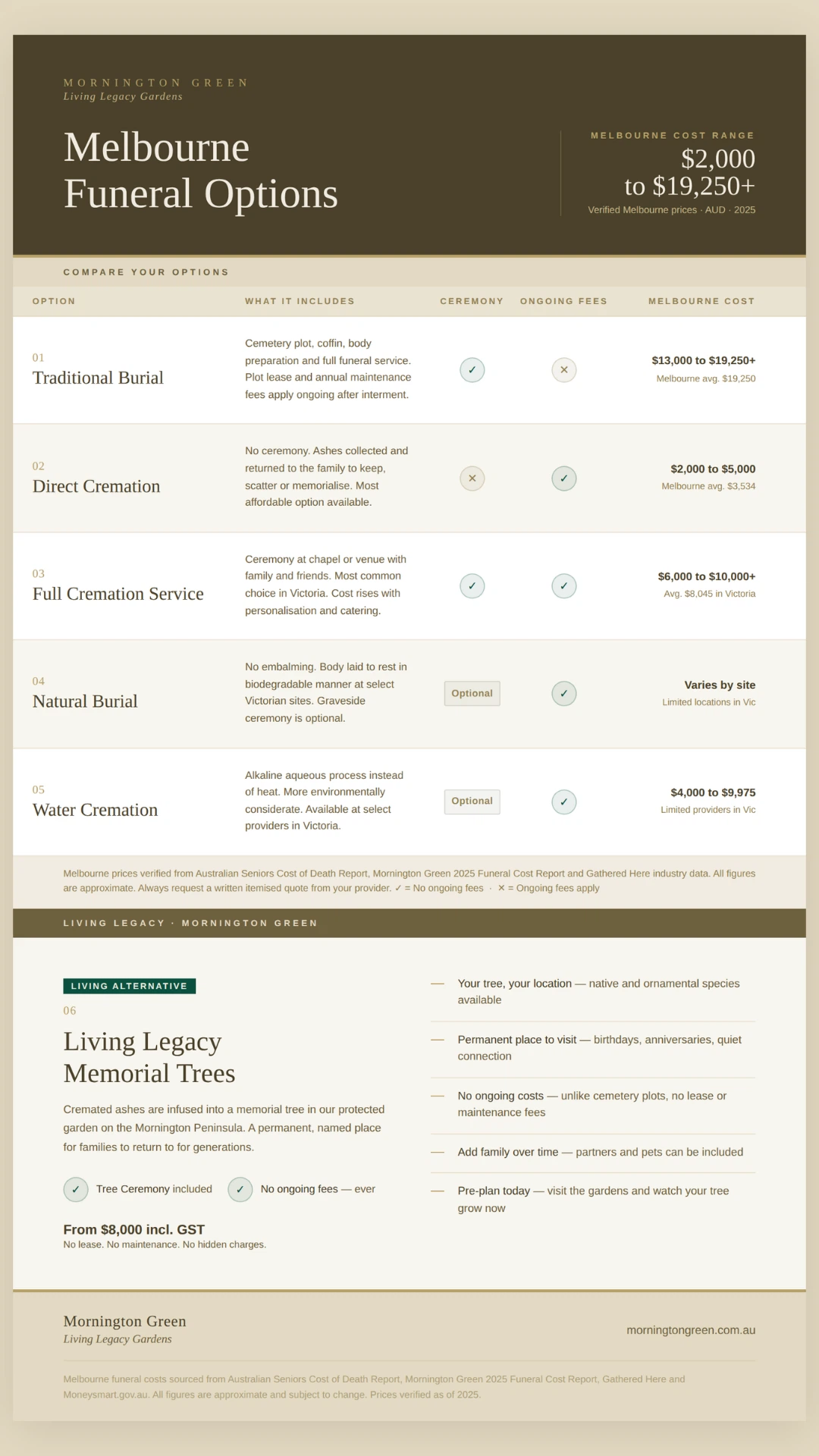
Melbourne has a wide range of funeral options, from traditional burial and cremation to newer alternatives. Costs vary considerably.
Traditional burial in a Melbourne cemetery ranges from around $13,000 to $19,500 or more, depending on the cemetery, the plot, and the services chosen. Ongoing grave maintenance fees apply at most cemeteries.
Cremation is the most common choice in Victoria. A direct cremation without a service can cost from around $2,500 to $5,000. A full cremation service with a ceremony typically ranges from $6,000 to $10,000. Cremated ashes can be kept at home, scattered, interred, or memorialised in other ways. Some families are also exploring water cremation in Australia, a newer option that uses an aqueous process rather than heat.
Natural burial is available at a small number of sites in Victoria. The body is buried without embalming in a biodegradable manner. For families considering this path, our full guide to green burial in Australia covers locations, costs, and legal requirements in detail.
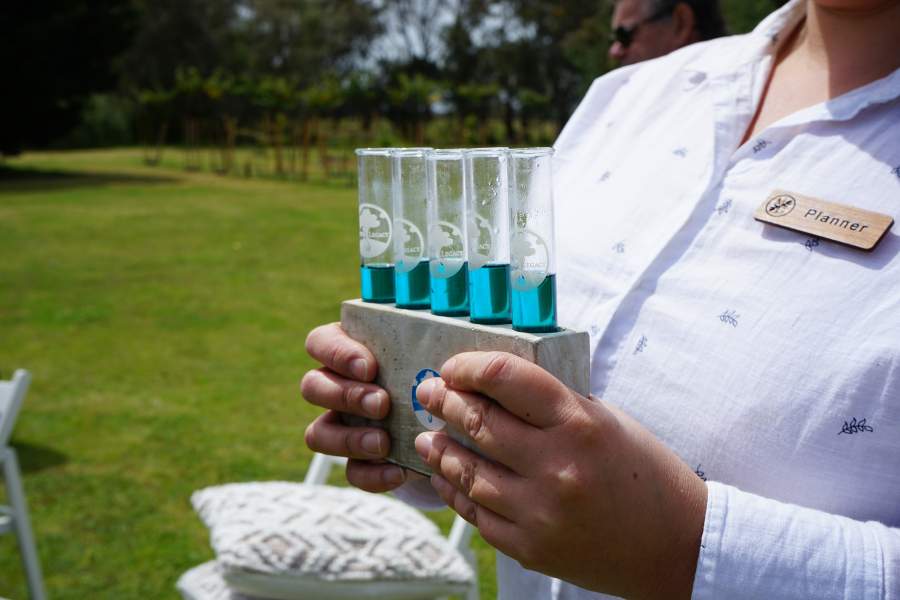
Living Legacy memorial trees are an option for families who want cremated ashes to become part of something living. At Mornington Green Living Legacy Gardens on the Mornington Peninsula, ashes are used to nourish a memorial tree in a protected garden setting. Families receive a permanent, specific place to return to over the years.
Living Legacy Trees: A Different Kind of Memorial
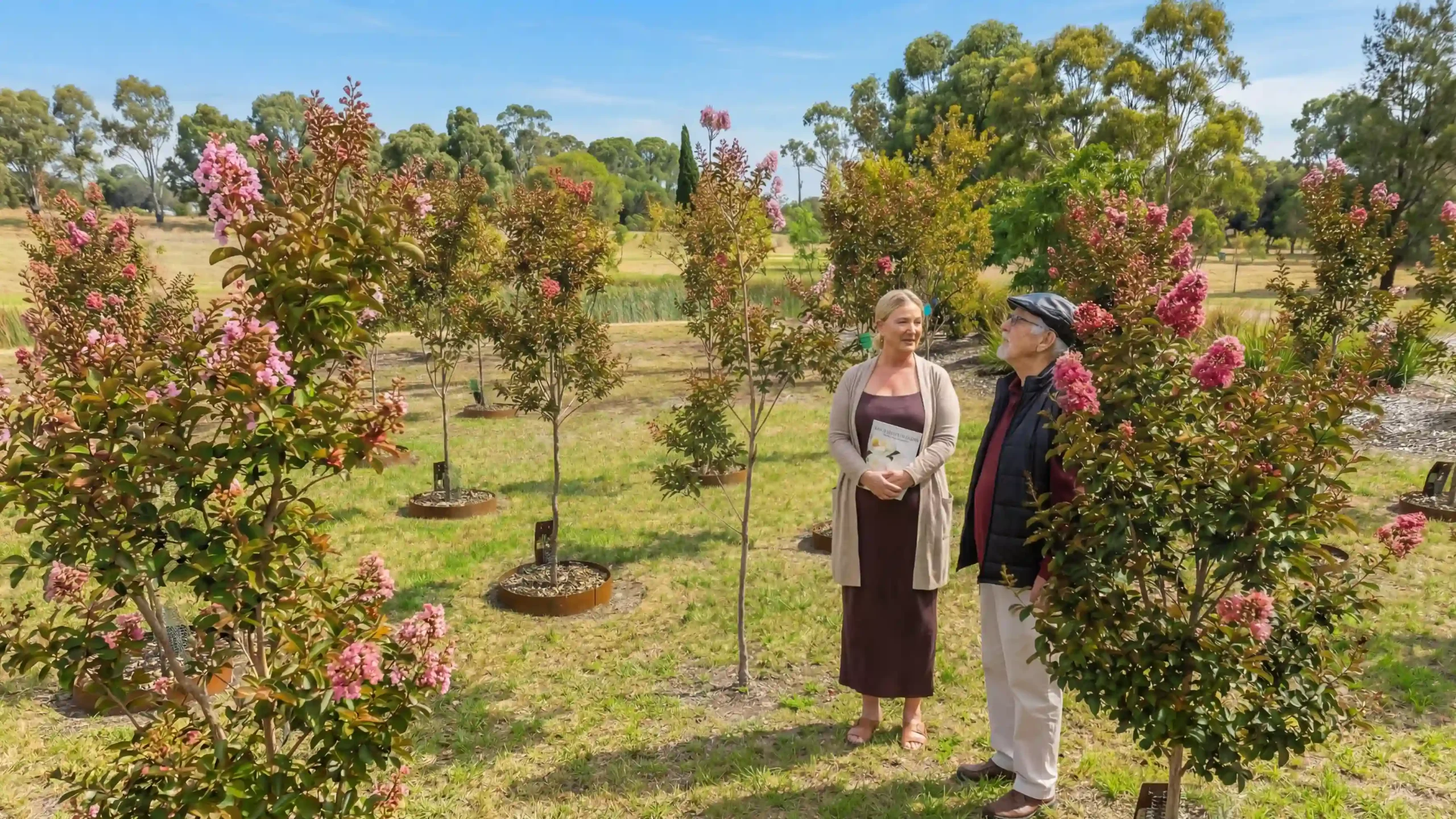
For some families, the idea of ashes sitting in an urn or being scattered without a fixed location doesn’t feel right. A living memorial tree offers something different: a specific place, a growing presence, and somewhere meaningful to visit as the years pass.
At Mornington Green, over 200 families since 2016 have chosen to memorialise someone through a Living Legacy Tree. Ashes are incorporated into the soil around a native tree planted in the gardens on the Mornington Peninsula. Families receive GPS coordinates, a tree dedication plaque, and permanent legal protection for the memorial under the site’s land management agreement. You can read more about how memorial trees work in Australia in our complete guide.
Unlike a cemetery plot with ongoing fees, a Living Legacy Tree is a one-time cost with no annual maintenance charges. Trees start from $8,000, which includes the ceremony, planting, and all documentation.
Families can visit at any time. Some come each season, watching the tree grow through the years. Others visit on anniversaries or whenever they feel the need to be somewhere connected to someone they’ve lost.
You don’t need to have already chosen cremation to enquire. Many families explore the option as part of broader planning, choosing a tree together with a parent while everyone is still well and before any of this feels urgent.
Supporting Someone Through the End of Their Life: What Families Ask
How do I start the conversation about end-of-life wishes?
Most people find it easier to start with practical questions rather than emotional ones. Asking whether someone has written a will, or whether they have a medical power of attorney in place, opens the door without feeling like a confrontation.
The booklet Dying to Know from the Australian Centre for Health Law Research is a useful conversation starter. Dying With Dignity Victoria also provides family resources and can connect people with support services.
What if someone refuses end-of-life care?
Adults with decision-making capacity have the right to refuse medical treatment in Victoria, including treatment that may extend their life. A person can ask for treatment to be withdrawn. A validly completed Advance Care Directive that expresses this wish is legally binding.
If you’re in this situation, a palliative care specialist can explain what comfort-focused care looks like once a treatment is no longer being given.
How do I support someone who is dying at home?
Ask them what they want. Not what you think they need, but what they actually want. Some people want company, some want quiet. Some want practical help, some want their hand held. The best thing a family can do is ask the question and then listen to the answer.
Beyond that: make sure medications are accessible and clearly labelled, know who to call if symptoms change, and don’t underestimate how much a palliative care nurse visit can help you understand what’s happening medically.
How do I look after myself while caring for someone who is dying?
Carer burnout is real and common. The Carer Gateway (1800 422 737) provides free counselling, respite care, and practical support for family carers across Victoria. Grief can also begin before a person dies. Anticipatory grief deserves acknowledgement and support. Your GP can refer you to grief services if needed.
Grief and Memorialisation After Loss
Grief doesn’t follow a schedule. The weeks after a death are often filled with administration, and then the quiet arrives. Many families find that having a specific place to go helps. Somewhere that isn’t just a headstone among hundreds of others, but a place that feels genuinely connected to the person they’ve lost.
Whether that’s a favourite park, a garden where ashes were scattered, or a living memorial tree, having somewhere to return to matters more than most people expect when they’re making these decisions. If you’re still deciding what to do with cremated ashes, our guide on what to do with cremated ashes in Australia covers all the main options families consider.
If you’re thinking about memorialisation as part of planning ahead, it’s worth exploring your options early. Mornington Green hosts open days at the gardens on the Mornington Peninsula, where families can walk the grounds and speak with a Legacy Planner. There’s no pressure and no obligation.
Frequently Asked Questions
What is the difference between palliative care and hospice care in Melbourne?
Palliative care is a broader category that focuses on comfort and quality of life for anyone with a serious illness, at any stage of that illness. Hospice care is a specific type of palliative care for people in the final weeks or months of life, where treatment aimed at a cure has stopped and comfort is the only goal. In Melbourne, hospice care is available in residential facilities and at home.
Is Voluntary Assisted Dying available in Melbourne?
Yes. Victoria legalised VAD in June 2019. It is available to eligible Victorians who meet specific medical and legal criteria. The VAD Care Navigator Service (1300 797 578) can provide information and support throughout the process.
What does a palliative care team do?
A palliative care team typically includes doctors, nurses, a social worker, and sometimes a chaplain or counsellor. They manage pain and physical symptoms, support the patient’s emotional wellbeing, help with advance care planning, and provide support for the family both during the illness and after the death.
Can someone with dementia access palliative care in Melbourne?
Yes. People with dementia can access palliative care. Many specialists say they should receive it earlier than typically happens in practice. Because dementia affects decision-making capacity over time, advance care planning is especially important for families after a dementia diagnosis. Getting documents in place while capacity is intact makes a real difference later.
What are the alternatives to burial in Melbourne?
Cremation is the most common alternative to burial. Other options include natural burial, water cremation (known as alkaline hydrolysis, available in some Australian states), and living memorial trees where ashes nourish a planted tree. Each option has different costs, legal requirements, and environmental considerations. For a full comparison, see our guide to alternatives to traditional burial in Melbourne.
How much does end-of-life care cost in Victoria?
Public palliative care through the Victorian health system is free for Medicare cardholders. Private palliative care involves out-of-pocket expenses that depend on the provider and your insurance cover. Home-based care costs vary depending on what’s needed and whether My Aged Care funding applies. Funeral costs range from around $1,500 for a direct cremation to $15,000 or more for a traditional burial with a full service. A palliative care social worker or GP can help identify what financial support is available in your situation.
A Note on Planning Ahead
None of this is easy to read. But the families who find end-of-life decisions most manageable are usually the ones who talked about them before a crisis arrived.
If someone you love has a serious illness, or if you’re thinking about your own wishes, the most useful step is booking an appointment with a GP to talk through advance care planning. It doesn’t take long. And it makes an enormous difference to the people who love you.
If you’d like to explore Living Legacy Trees as a memorial option, Mornington Green hosts regular open days at the gardens on the Mornington Peninsula. You can read more about turning ashes into a tree, book a time at morningtongreen.com.au, or call (03) 9059 4959.
This article is intended as general information only. It is not medical or legal advice. For guidance specific to your situation, please speak with a GP, palliative care specialist, or legal professional.